Ballet photography goes way back to the late 19th century and has preserved precious images of early ballerinas and premier danseurs. Going even earlier in ballet history, there are excellent drawings of ballet stars, ballet classes, and ballet masters.
It's fantastic that now we can view productions from ballet companies all around the world on DVD. For ballet fans who are not in a major city that is visited regularly by ballet companies, this is especially handy.
There is so much to look at, and how can we pick and choose what to learn from? Of course ballet is taught by a live ballet teacher, not from an ebook or DVD.
But between classes there is opportunity to understand class lessons better, or study certain ballet positions or movements that may be difficult.
The Cecchetti method of ballet, the Royal Academy of Dancing and the Vaganova method are the three best known methods of teaching ballet. Most major full time professional ballet schools combine these styles, not necessarily by using all three grading systems, but by employing staff and guest teachers who have a well rounded training themselves.
The Auguste Bournonville choreographic tradition shows up a lot in the Cecchetti grades, as just one example of how classical choreography has become embedded in training.
If you are interested in starting ballet, find out what schools in your area teach a syllabus (grading) system, or if they do not, what is the background of the teachers. Retired professionals do not always teach from one of these three systems, yet can be excellent at teaching from their own training.
If you are training to dance simply for your own enjoyment, you may or may not like the pressure of ballet exams - yet, it is part of the discipline in most schools. Whatever your preference, check around and find the right school for you.
If you are taking ballet for weight loss and you are on the right diet, you won't be disappointed. Ballet classes burn a fair amount of calories, and also help build muscle. Since muscles burn calories all by themselves, even when you are sleeping, gaining muscle mass is very healthy. Ballet is also good exercise for healthy bones as well.
Dance injuries are usually the result of sloppy technique or too much muscle tension. Work as accurately as you can, and if you are having trouble with a ballet position or movement, do not be shy. Ask for help. For one thing, repeatedly practicing a ballet movement incorrectly will lead to increased muscle tension.
If you are a curious student and want to know the ins and outs of the mechanics of ballet movements, and what would be anatomically correct, get one of the ballet books written on functional anatomy.
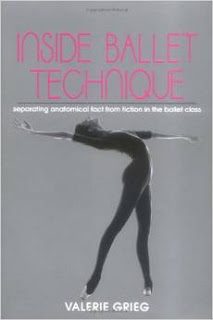
It will help you sort out how to improve ballet positions and movements. Not everything in ballet is anatomically correct, and details about that is good for you to know.
Whatever ballet technique you choose to study, always enjoy the movements that you do more easily, learn ballet positions for pointe shoes, and take good care of yourself.


